Professor Zhan-guo Li has worked with a team of researchers from Peking University People’s Hospital, China, to carry out a laboratory study in which cord blood stem cells were used to suppress inflammation and weaken the disease.
Professor Li said, “Very little is known about umbilical cord MSCs, and there has been no previous report about their use in the treatment of RA. MSCs can exert profound immunosuppression, which encourages their use in the treatment of autoimmune diseases, such as RA. At present, the most common source of MSCs has been bone marrow. However, aspirating bone marrow is an invasive procedure and the number and the differentiating potential of bone marrow MSCs decrease with age. In contrast, the collection of umbilical cord MSCs does not require any invasive procedure.”
The researchers took immune cells from RA patients and showed that the umbilical MSCs were able to suppress the cells’ proliferation, invasive behavior and inflammatory responses. Systemic infusion of the umbilical MSCs into mice was shown to significantly reduce the severity of collagen-induced arthritis.
Speaking about the results, Professor Li said, “RA imparts a massive burden on health services worldwide and none of the currently used agents reaches long term drug-free remission. Therefore, a new and more effective therapy for RA will be very welcome.”
Little Lily Hasselman has already been through a great deal in her first five years. She was diagnosed with Cystic Fibrosis at just six weeks of age and as a result has to endure daily painful physiotherapy, take medication with every meal, and undergo constant medical checks.
Cystic Fibrosis is a life-shortening genetic condition, with no known cure. Many children with the disease used to die in early childhood, but even with treatment advances their life expectancy rarely exceeds 30 years.
However hope is on the horizon. Professor Bob Williamson of Melbourne University is behind a new Australian medical study which aims to prove that umbilical cord blood can successfully treat cystic fibrosis.
The project will use sibling cord blood to regenerate the damaged lung cells of the affected child. “Most CF siblings cord blood has a 1 in 4 chance of being a perfect match that will not be rejected by the immune system of the child living with CF.”
This is where Lily’s little brother and sister come in. Two year old Henri and six month old Zara are both CF-free and had their umbilical cord blood banked at birth with CordBank.
Professor Williamson says Lily’s siblings’ cord blood won’t be used in the study, but will be kept for when a breakthrough comes. The study will prove the safety of the treatment with donated cells from unrelated people, and lab tests are showing positive signs.
Lily’s mum, Sarah-Jayne’s advice to any parent considering storing their baby’s cord blood is, ”Just do it. You never know what might be round the corner and although as parents you hope your children will never need to use their cord blood – it’s a great insurance.”
Researchers from the University of South Florida and their private sector collaborators say transplanting stem cells derived from umbilical cord blood may offer future therapeutic benefit for those suffering the degenerative and ultimately fatal Alzheimer’s disease, which affects around 43,000 New Zealanders. Those figures are projected to double in the next 15 years, and to continue doubling every 20 years thereafter.
“Umbilical cord blood cells are relatively easy to obtain, appear to be able to differentiate into many kinds of cells, and are immunologically immature, offering them the potential to promote cell survival rather than play a cell replacement role when transplanted,” said Dr. Paul Sanberg, distinguished university professor and executive director of the Center of Excellence on Aging and Brain Repair at the University of South Florida.
One of the major causes of Alzheimer’s is deposits of amyloid beta (AB), a chemical that activates the immune response in the brain which leads to inflammation.
“It is likely that umbilical cord blood can modify this inflammatory response and provide beneficial effects in animal models of Alzheimer’s,” said Dr Jun Tan, professor of psychiatry and Robert A. Silver chair at the Rashid Laboratory for Developmental Neurobiology, USF Silver Child Development Center who recently completed a study in which the brain-to-blood clearance of AB was demonstrated. Based on the findings of this research, Dr. Tan is developing clinical protocols.
Umbilical cord blood cells transplanted into animal victims of Alzheimer’s have demonstrated their therapeutic potential for reducing inflammation, which prevents neurons in the brain from communicating properly.
“Our immediate goal is to move our beneficial findings with cord blood cells into clinical trials for patients with mild to moderate Alzheimer’s disease,” said Dr. Tan. To read more about the study, click here.
• Dr Young’s trials are being undertaken by the China Spinal Cord Injury Network (China SCINET) which he helped established in 2003. It is the largest spinal cord injury clinical trial network.
• ChinaSCINet has completed three clinical trials to date. The first is an observational trial of 500 subjects with spinal cord injury (SCI) to show that the 24 ChinSCINet centers in mainland China, Hong Kong, and Taiwan can collect follow up data on people with SCI.
The second is a phase 1 trial carried out at Queen Mary Hospital of Hong Kong University showing the safety and feasibility giving a 6-week course of oral lithium to 20 people with chronic SCI.
The third is a double-blind randomized placebo control trial to assess the safety and efficacy of a 6-week course of oral lithium. The fourth trial is currently being carried out.
This trial is testing increasing doses of umbilical cord blood mononuclear cells (UCBMC) without and then combined with a 6 week course of lithium on 40 patients. If this trial shows promising results, testing the treatment in phase 3 trials in China, United States, India, and Norway will commence.
• As many US patients wanted to take part in the China-based trial, Dr Wise established a US-based group (called SCINetUSA). Several US-based spinal cord injury centres have expressed interest in joining this group including Mt Sinai Medical School (NY); UMDNJ/Kessler Institute of Rehabilitation Medicine and the University of Colorado at Denver. The flagship institution in SCINetUSA is University Medical Center Brackenridge in Austin, Texas.
July has been designated “Cord Blood Awareness Month” by the American Hospital Association’s Society for Healthcare Strategy & Market Development (SHSMD), with the goals of raising awareness about cord blood stem cells and helping empower expectant parents to make informed choices regarding their family’s future health.
Here in New Zealand you can help raise awareness by telling expectant friends and family members about cord blood banking. For everyone who then registers with CordBank – you will both get 1 year’s free storage. For more information click here
A study initiated by the World Health Organization and published in the May Journal of the American Medical Association shows that stem cell transplantation has become an accepted therapy worldwide and that the majority of transplant patients received a source of their own (autologous) stem cells.
This global study evaluated the more than 50,000 stem cell transplants performed in a specific calendar year (2006) and found that in 57% of the cases, the transplants used an autologous, or a patient’s own, source of stem cells for certain cancers and blood disorders.
This is the first time that the current state of hematopoietic stem cell transplantation has been documented on a global level, say the authors, led by Alois Gratwohl, MD, from the University Hospital Basel in Switzerland.
This information “has become a necessity for correct patient counseling and healthcare planning,” they add.
Hematopoietic stem cells collected from a newborn’s cord blood have been used successfully for more than 20 years in transplant medicine.
They are recognized as having distinct advantages compared to other sources of stem cells, because they are younger, more adaptable and have limited exposure to viruses and other environmental factors that can alter cell function.
The authors also note that a matched sibling (within the family) might represent the most efficient way of therapy for a patient with a genetic disorder such as aplastic anemia, thalassemia or severe combined immunodeficiency.
In February 2010, a study reporting the successful treatment of spinal cord injury in dogs using cord blood was released – with researchers confident that the this technique has many potential applications in the treatment of human spinal cord injury.
While previous research on spinal cord injury has typically used rats, this study used dogs which have a spinal cord structure more similar to humans. Within the test group, those dogs that received cellular transplants exhibited gradual improvement in hind limb locomotion two to three weeks after the transplant and also demonstrated reduced cyst and injury size.
The study was a collaborative effort between a team of doctors from the Department of Veterinary Science and Veterinary Anatomy at Konkuk University in Seoul Korea.
Dr Han, President and founder of Histostem, said the research demonstrated a new less invasive method of transplanting cord blood stem cells which avoids surgical exposure and allows the cells to be more precisely transplanted into the spinal cord.
Stem cells that could one day provide therapeutic options for muscle and bone disorders can be easily harvested from the umbilical cord, just as the blood that goes through it provides precursor cells to treat some blood disorders, said University of Pittsburgh School of Medicine researchers in the online version of the Journal of Biomedicine and Biotechnology.
Umbilical cord tissue cells can be expanded to greater number, are remarkably stable and might not trigger strong immune responses, said senior investigator Bridget M. Deasy, Ph.D., assistant professor in the Department of Orthopaedic Surgery, Pitt School of Medicine.
The cord could become an accessible source of a multitude of stem cells that overcomes many of the restrictions, such as limited quantity as well as donor age and donor sex issues, that come with other adult stem cell populations.
Dr. Deasy and her team analyzed sections of two-foot-long human umbilical cords that were donated for research, looking for cells in that displayed the characteristic protein markers found in stem cells derived from other sources. The researchers then sought to find the best way to isolate the stem cells from the cords, and tested them in the lab to confirm their ability to produce specialized cells, such as bone and cartilage, while retaining their invaluable ability to renew themselves.
To build on these findings, the team will test the umbilical cord stem cells in animal models of cartilage and bone repair, as well as muscle regeneration.
Co-authors of the paper include lead investigator Rebecca C. Schugar, of Pitt’s Stem Cell Research Center, Department of Orthopaedic Surgery, and the Center for Cardiovascular Research, Washington University School of Medicine; Steven M. Chirieleison, Yuko Askew, M.D., Ph.D., Jordan J. Nance, and Joshua M. Evron, all of the Pitt Stem Cell Research Center; Kristin E. Wescoe, Benjamin T. Schmidt, both of Pitt’s Department of Bioengineering; and Bruno Peault, Ph.D., of the University of California-Los Angeles and the McGowan Institute for Regenerative Medicine, a joint effort of Pitt and UPMC.
The research was supported by grants from the National Institute of Arthritis and Musculoskeletal Research and Children’s Hospital of Pittsburgh of UPMC.
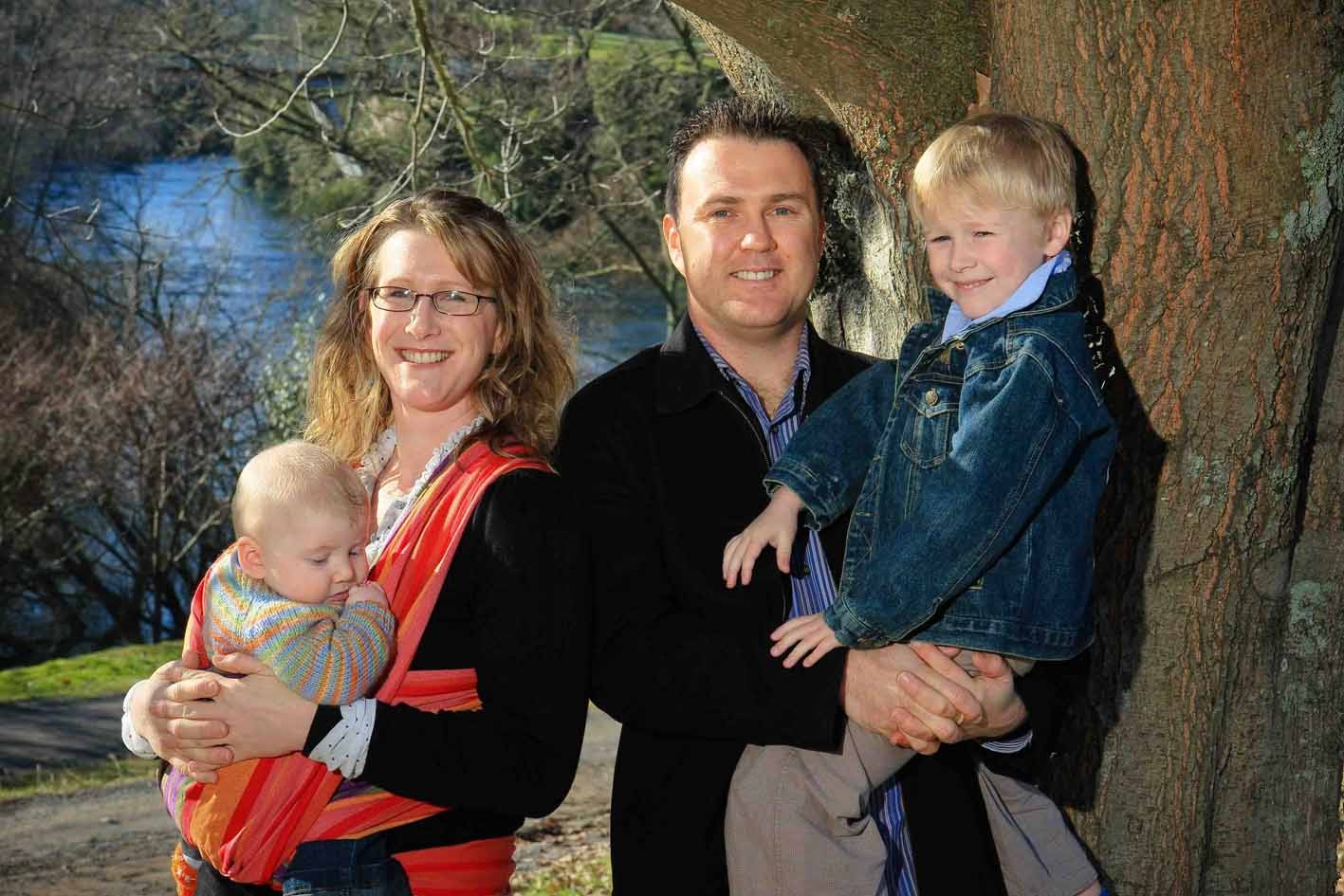
The O’Neill family from Cambridge are the first New Zealanders to take part in a ground breaking medical study into cystic fibrosis, thanks to the generosity of CordBank.
The O’Neills decided to bank the cord blood of their second son, Lenny, in the hope that it may one day be able to help treat his five year old brother, Liam, who suffers from the disease. As a result, they stand to benefit from the study which aims to prove that umbilical cord blood can successfully treat cystic fibrosis.
Monique and Sean O’Neill said, “We were approached by The Cystic Fibrosis Association to see if we would be interested in taking part in the medical study which is supported by CordBank, who are providing complimentary cord blood banking to New Zealand families who have a cystic fibrosis child and want to bank a sibling’s cord blood”.
“We are so relieved that we made the decision to bank Lenny’s cord blood and are thankful to CordBank for all their help. We are very excited about the search for a cure using cord blood, and want to do everything we can to help our son Liam and other cystic fibrosis kids benefit in the future”.
“Liam has a daily struggle with cystic fibrosis, and anything that can be done to help him and other young people with cystic fibrosis is an amazing thing as far as we are concerned.”
The Cystic Fibrosis Association approached CordBank to see if the company would be interested in providing free cord blood collection for up to 3 families who had a cystic fibrosis child and wanted to bank a sibling’s cord blood. Once Professor Bob Williamson’s team at the University of Melbourne’s Faculty of Medicine has proved that umbilical cord blood can be used to regenerate lung cells for children with cystic fibrosis, the stored sibling cord blood will be used to treat the brother or sister suffering from the disease.
“Most cystic fibrosis siblings will not have the mutation causing cystic fibrosis, and sibling cord blood has a one in four chance of being a perfect match that will not be rejected by the immune system of the child living with cystic fibrosis”, said Professor Williamson.
“However, the cord blood of cystic fibrosis siblings is too precious for us to use in our study, and we are able to do our work on samples donated by unrelated people who are not affected”.
“But thanks to CordBank in New Zealand, we are ensuring that affected families are banking precious sibling cord blood now so they are ready when a breakthrough comes.”
Professor Williamson emphasised that the breakthrough could still be several years away, however even at this early stage, there are positive signs the project is going well, and some lung proteins have been expressed in the cord blood cells in the test tube, “Cord blood is a very exciting resource, full of different kinds of stem cells. These have already been shown to form liver, brain and skin cells, and they represent a real hope for people with cystic fibrosis now that we can add lung cells to the list. We already know that umbilical cord blood is known to be safe and effective when used to treat childhood cancers and leukaemia, and we hope that cord blood will provide cells with a potential to rebuild damaged lungs in people with cystic fibrosis.”
Announcing CordBank’s involvement with the project, the Chief Executive of the New Zealand Cystic Fibrosis Association, Kate Russell, said CordBank’s support was very much appreciated.
“Cystic fibrosis is an expensive illness and families with a cystic fibrosis child can be placed under severe financial strain. People would be surprised at what the government does not fund in terms of the most basic medical equipment and support for these families”.
Cystic fibrosis is a life-shortening genetic condition, with no known cure at this time. Many children with cystic fibrosis used to die in early childhood, but advances in treatment have extended life expectancy to 30 years and more.
The condition primarily affects the lungs and digestive system, causing a build up of thick sticky mucus in the body resulting in repeated lung infections and severely impaired digestion. To keep healthy, people with cystic fibrosis must receive chest physiotherapy daily to keep their lungs free of mucus. Regular antibiotic treatment, dozens of enzyme pills to aid digestion, and periods of hospitalisation are also a part of life with cystic fibrosis.