A year after tragically losing their two-year-old triplets in a fire in a Doha mall, local family Martin and Jane Weekes welcomed their new babies into the world. Born on July 30, the twins were a very special addition to the family and their arrival was celebrated by us all.
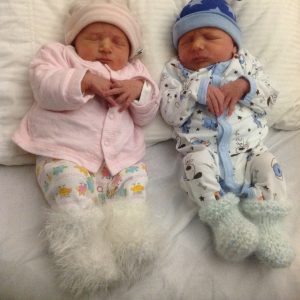
Poppy and Parker
Proud father Martin described their delivery as a “relief “.
“We’re so pleased that they’ve been born healthy and safely because it’s always a worry. I guess probably more so for us because of having lost Lillie, Jackson and Willsher.”
Just as they did for the triplets, Martin and Jane have banked Poppy and Parkers cord blood as a safeguard for their future.
“The life of every child is priceless, and as parents we all want to do the utmost for our children. When they are born the last thing on our minds is that they won’t be with us forever.
When we were pregnant with our triplets Lillie, Jackson & Willsher we decided to bank their cord blood in case they ever developed an illness that could be treated with their own stem cells. The true value of our cord blood is only just becoming understood, and everyday medicine is learning new things about its potential. However we only have one chance to secure it for our children’s future. Sadly we tragically lost Lillie, Jackson and Willsher when they were just 2 years old.
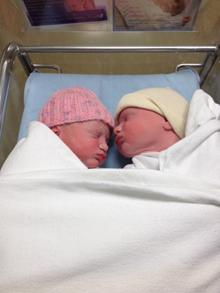
When we became pregnant with our twins Poppy & Parker we both had no doubts that again we would bank their cord blood. No parent should ever face the pain of losing a child and now more than ever we would do anything to have them with us for the rest if our lives and many years beyond.
Like any insurance policy we hope they never need it, but if one day they do we’d hate to have missed making this valuable investment in their lives.
We also hope that Lillie, Jackson and Willsher’s cord blood can be used to help someone else in the future. Whether that be one of their brothers or sisters, or be donated to another seriously sick child it would be so incredibly special for that to be their legacy.”
An international case report, just published by the Ruhr-University Bochum over the weekend details the recovery of a little boy – who went from a vegetative state – with no prospect of recovery – to a walking, talking and smiling child – after treatment with his own cord blood. To download and read the full case report, click here.
The toddler (known as LB) was perfectly healthy before he went into cardiac arrest in November 2008 – which left him paralysed with severe brain damage and in a vegetative state.
The prognosis for the little patient was described by his doctors as poor – with 40% of children in a similar situation dying and 100% in a permanent state of vegetative brain damage.
LB’s parents had banked his cord blood at birth and asked Dr Arne Jensen of the Campus Clinic Gynaecology (Ruhr-University Bochum) to re infuse it to treat his injured brain. He agreed and 9 weeks after the brain damage, on 27 January 2009, the doctors gave LB his cord blood back in a 40 minute procedure.
Doctors then monitored his recovery at 2, 5, 12, 25, 30 and 40 months after the treatment with cord blood and have published the results they saw.
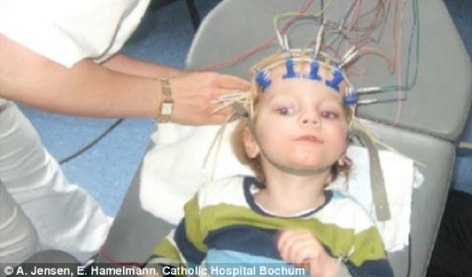
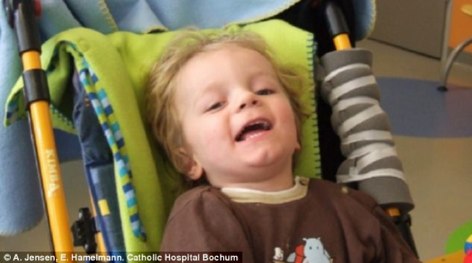
Before cord blood stem cell reinfusion
After cord blood stem cell reinfusion
They describe LB’s improvement after treatment as “remarkable”- with the toddler becoming responsive after just 7 days after getting his cord blood back.
After 4 weeks he was able to reach out and touch an object and after 2 months his eyesight partially returned. He could also grasp, hold, bite, chew and swallow a biscuit, began laughing and could say the word “mama”.
By 5 months his EEG was normal, and he was able to point to his eyes, ears and nose on request. He could also clap and play again.
After 12 months he could sit unsupported and walk when supported – as well as playing give-and-take games and be able to name animals.
Two years after the treatment he could eat independently, speak a few words and understand many more. He could walk independently in a gait trainer and played imaginative games.
At 30 months he had an 80 word vocabulary and formed two word sentences.
40 months after the cord blood treatment, the little boy showed more improvement in speech and walking – with his vocab more than doubled. His ability to speak was better than it had been before he had the heart attack at 2.5 years old.
His doctors concluded that given the degree of brain damage and the persistent vegetative state he was in, it is unlikely that his recovery was due to rehabilitation alone.
They say the results reported should dispel any questions about the effectiveness of cord blood stem cell therapy. It supports the hundreds of reports from parents and specialists internationally who have seen this type of improvement in children treated with their own cord blood.
Congratulations to new parents Ali and Casey Williams, who welcomed their little girl into the world just last week!
Little Jessica Harriet Williams was born on the 2nd of April weighing exactly seven pounds. Mum and baby are doing very well according to Blue’s captain Ali, and Jessica’s cord blood is already safely stored here at CordBank.
Here is their story, which also features in this months Little Treasures Magazine:
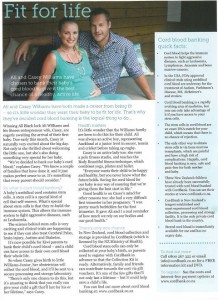
Ali and Casey Williams have chosen to bank their baby’s cord blood to give it the best chance of a healthy active life.
Ali and Casey Williams have both made a career from being fit – so it’s little wonder they want their baby to be fit for life. That’s why they have decided that cord blood banking is the logical thing to do…
Winning All Black lock Ali Williams and his fitness entrepeneur wife, Casey, are eagerly awaiting the arrival of their first baby. Due early this month, Casey is naturally very excited about the big day. Not only is she thrilled about welcoming the little one, but she is also doing something very special for her baby.
“We’ve decided to bank our baby’s cord blood,” explains Casey. “We know a couple of families that have done it and it just makes perfect sense to us. It’s something every parent should consider.”
So what is cord blood banking?
A baby’s umbilical cord contains stem cells. A stem cell is a special kind of cell that self-renews. What’s special about stem cells is that they rebuild the immune system. This allows the immune system to fight aggressive diseases, such as Leukaemia.
The science behind stem cells is very exciting and clinical trials are happening to see if they can also treat cerebral palsy, brain injury, autism and diabetes.
It’s now possible for Kiwi parents to bank their child’s cord blood – and a child can have access to their own cord blood their whole life.
So when Casey gives birth to little Williams Junior, her obstetrician will collect the cord blood, and it’ll be sent to a secure processing and storage laboratory.
“There’s only one chance to do this, but it’s amazing to think that you really can give your child a gift that’ll last his or her lifetime,” says Casey.
Health Matters
It’s little wonder the Williams family are keen to do this for their child. Ali was always an active boy, representing Auckland at a junior level in soccer, tennis and cricket before taking up rugby. Casey is an active lady too: she runs a pole fitness studio, and teaches the Body Beautiful fitness technique, which combines yoga, pilates and ballet.
“Everyone wants their child to be happy and healthy, but you never know what the future holds. Saving the cord blood for our baby is our way of ensuring that we’re giving them the best start in life.”
Good health is on Casey’s mind for other reasons too: she had a very difficult first trimester in her pregancy. “I was pretty much bedridden for the first trimester. Its gave Ali and I a real reminder of how much we rely on our bodies and our good health.”
There’s only one chance
In New Zealand, cord blood collection and storage is provided by CordBank (which is licensed by the NZ Ministry of Health).
Cord blood stem cells can only be collected at your baby’s birth, so parents need to register with CordBank in advance so that the Collection Kit is ready. Alternately, family and friends can contribute towards the cost via gift vouchers. It’s one of the few gifts that will not only last a lifetime – but could help save a child’s life.
This article can also be found in this months Little Treasures glossy magazine.
As a nurse at a hospital in Arizona, Rachel Fryar first learned about the benefits of cord blood banking at work. When she and her husband, Colby, became pregnant with their first son, Jacob, they banked for the same reasons many families do – to be prepared because you just never know.
By the time the couple was expecting their second child, however, Rachel was on the fence about banking again. “I thought that saving Jacob’s stem cells would be enough, if we should ever need them for the family,” she says. But her husband was determined to save for every child.
Luke Fryar was born March 29, 2008, without complication, but at 7 months, when other babies his age were able to sit up and flatten their palms to crawl, Luke was showing signs that his right side was impaired and his pediatrician recognized the symptoms of cerebral palsy. Click here to find out how his cord blood changed his life.
Ali & Casey Williams to join the CordBank family
Following a fabulous, celebrity-filled wedding in Queenstown at the end of 2011, Casey & Ali Williams are now excitedly awaiting the arrival of their first baby.
Due in April, Casey was positively blooming when we recently caught up with the couple to chat about their exciting news.
Ali, World Cup winning lock, 77-Test veteran and captain of the Blues, said he was “looking forward to embracing a new challenge – fatherhood”, whilst Casey said “I just know he’s going to be a great dad!”
Casey added, “We are excited about banking the cord blood for our baby. We know a couple of families that have done it and to us it made perfect sense – it’s something every parent should consider.”
Scientists create stem cell contact lens
Researchers have found a better and a cheaper way to restore human sight by implanting a contact lens containing stem cells that will repair the human cornea.
Scientists from the University of Sheffield in the UK, hope that the biodegradable implant disc’s stem cells will multiply in the eye, thus rebuilding the transparent layer on the front of the eye, known as the cornea, the degradation of which is one of the major causes of blindness in the world, a study published in Acta Biomaterialia journal revealed. Click here to read more.
When Shai Verter died, on the day she was due to start school, her mother Frances had two choices.
Become lost in her grief or help other parents learn from her experience.
She chose to help others and the website she built – “Parents Guide to Cord Blood Banking” is now the leading resource for education about cord blood for expectant parents in the US and around the world.
“I think if Shai had lived she would have been a lot like me because she was a fighter… she was very brave.”

Although I couldn’t save her, fighting to raise awareness about cord blood banking is my way of honouring her memory. You can watch Shai’s story here and find out how you can help keep her memory alive.
Cord blood saves toddler after drowning
At only one-year-old Sparrow Morris fell into the family swimming pool and was without oxygen for many minutes. Here in NZ, 37 children each year are hospitalised due to a near drowning and in Australia, drowning is the number one cause of accidental death for children aged 0-4. Against all odds Sparrow survived but suffered significant brain injury – leaving her parents with no hope of her condition improving.
Her outlook was bleak – reduced to functioning at the level of a 3 month old.
But a year after her almost fatal accident, Sparrow received an infusion of her stored cord blood at a US hospital.
To see her what happened next click here.
Behind the scenes with Mandy Barker
Since 2005, when their first little girl Mia was born. Dean and Mandy Barker have been big fans of cord blood banking. Mandy was well aware of the devastating effects serious health problems can have on family life, having lost her sister to cancer at an early age.
So as each of their precious children arrived, they stored their cord blood with us.
Last month Mandy and Dean invited Little Treasures into their home to share their story and encourage more families to save their children’s cord blood too.
“For us it’s always been more a question of “why wouldn’t you do it?” rather than “why would you?”
“For me, it was such an obvious decision,” Mandy says. “Why wouldn’t you give your children that opportunity, that wasn’t available to our parents but is for us?”
For an exclusive behind the scenes look at their gorgeous family photos click here.
We all get a chance to share Frances Everall’s joy this week as she celebrates 4 years free from the deadly cancer that nearly claimed her life.
In an exclusive interview with Woman’s Day 7 November 2011 (on sale from today), Frances and her family enjoy a party they never thought they’d see.
Thanks to her cord blood she conquered the cancer and lived to tell her tale. We’re thrilled to bring you a few photos from her fun-filled day.


“I’m so happy I didn’t die”
With those heart-stopping words Frances Everall sums up how she feels about surviving a deadly cancer 4 years ago this week.
At the time, doctors at Starship hospital told her parents to take her home to die – as the outlook was hopeless. If the cancer didn’t kill her the doctors said, the treatment possibly would.
But thanks to her family’s decision to bank her cord blood at birth, doctors were able to use these precious stem cells to rebuild her immune system after it was destroyed through the cancer treatment.
Frances had developed a Stage 4 neuroblastoma – a solid tumor cancer that affects around 5 New Zealand children every year.
A child’s own cord blood stem cells are the ideal cells to rebuild their immune system after cancer treatment – but these have to stored at birth so they are on hand when needed.
Thankfully Frances’ parents banked her cord bood at birth – giving us all the chance to share their joy at her special “Hollywood” themed party held in Auckland this month.
Complete with a red carpet and a Bruno Mars impersonator the birthday celebration will be another milestone to remember for us all.
More Photos from Hollywood…


Next month will see Aucklander, Frances Everall celebrating the fourth anniversary since her successful reinfusion with her cord blood stem cells, a very special milestone her family never thought she’d see.
In 2007, aged just four, Frances Everall was diagnosed with a Stage 4 Neuroblastoma (a cancer of the nervous system) and one of the options given by doctors at Starship was to take her home to die. If the cancer didn’t kill her the doctors said, the treatment possibly would.
Family member Kristina Anderson said there was no history of cancer and they were devastated when doctors at Starship said Frances wasn’t expected to survive the Stage 4 cancer they diagnosed.
But thanks to their decision to bank Frances’ cord blood at her birth, they were able to use these precious stem cells to rebuild her immune system after it was destroyed through the cancer treatment.
Today Frances is healthy little girl enjoying school and time with her family and friends.
“You never know what’s going to happen in your child’s future – having the cord blood stored saved her life.”
The family thinks of it as similar to taking out a fire insurance policy, “You don’t want your house to burn down but if it did you’d be pleased you had planned for it,” said Kristina.
A study at Shandong University in China is currently recruiting participants to investigate the efficacy of cord blood stem cells to treat Type 2 diabetes.
Type 2 diabetes is by far the most common form of diabetes. In New Zealand about 270,000 people have Type 2 diabetes and about one third of cases of Type 2 diabetes are undiagnosed. The numbers of people developing Type 2 diabetes is rapidly increasing.
Type 2 diabetes most often occurs in adulthood between the ages of 30 to 40. However, increasing numbers of teenagers and children are developing Type 2 diabetes. New estimates indicate 500 young people aged between 10 and 18 years have the disease that was, only a few years ago, virtually unknown in this age group.*
The study started in July this year and will be completed in July 2014. To read more on the study click here
Back in 2009, we reported on research from Italy published in the journal Cell Transplantation that investigated whether hearing loss due to cochlear damage could be repaired by transplanting cord blood stem cells. At the time the research team carried out their testing on animal models. Moving forward to 2011, the research is now ready to be tested on humans.
The University of Texas Health Science Centre in Houston is now recruiting human participants for a trial to investigate the use of autologous cord blood stem cell treatment in children with acquired hearing loss.
Acquired sensorineural hearing loss is characterised by a loss of functioning hair cells in the Organ of Corti, with greater hair cell loss correlating with more severe hearing impairment. Children with sensorineural hearing loss experience difficulty developing normal language which usually leads to poor academic and social development. Currently, there are no reparative therapeutic options available, and treatments are designed to augment the diminished function of the injured Organ of Corti.
Pre-clinical data suggests progenitor cell infusions may enhance intrinsic repair mechanisms in the Organ of Corti which may restore hair cells. This treatment could ultimately lead to hearing improvement. Human umbilical cord blood (hUCB) is an available, autologous, stored progenitor cell population available for potential therapeutic use.
The primary objective of this study is to determine the safety of autologous hUCB infusion in children with acquired hearing loss. The secondary objective is to determine if functional, physiologic and anatomic outcomes are improved following hUCB treatment in this patient population.